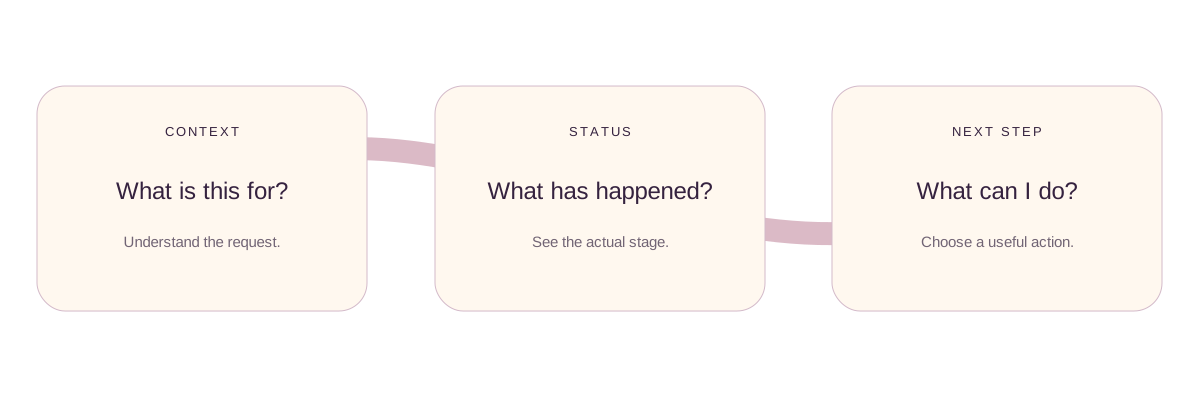
Start with the reason,
not just the amount.
“Your share of Saturday’s booking” gives a request a different starting point from an unexplained number. A product could make the original arrangement, participants and agreed allocation available before anyone is asked to act.
For a shared expense, that might mean an editable record and a way to question a portion. For an existing loan, it might mean showing the agreed plan and the provider responsible for it.
Say what happened.
Keep the stages distinct.
A reminder sent, a request opened, a payment initiated and a payment confirmed describe different events. An email opening would not establish that money had arrived.
A future service could explain what each status means and which system supplied it. If confirmation is unavailable, the interface could say so instead of presenting a confident completion state.
Leave room
for a conversation.
The next step is not always a payment. Someone may need to question a shared cost, correct a record or contact a provider about an existing arrangement.
A thoughtful brief could define those routes alongside reminders. The product’s tone could be direct without using shame, escalating language or an artificial countdown to push a decision.
About this perspective
This is original naming and product commentary, not financial advice or a description of an operating service. Any future transfer, lending or servicing product would need its own providers, permissions, terms and operational design.